
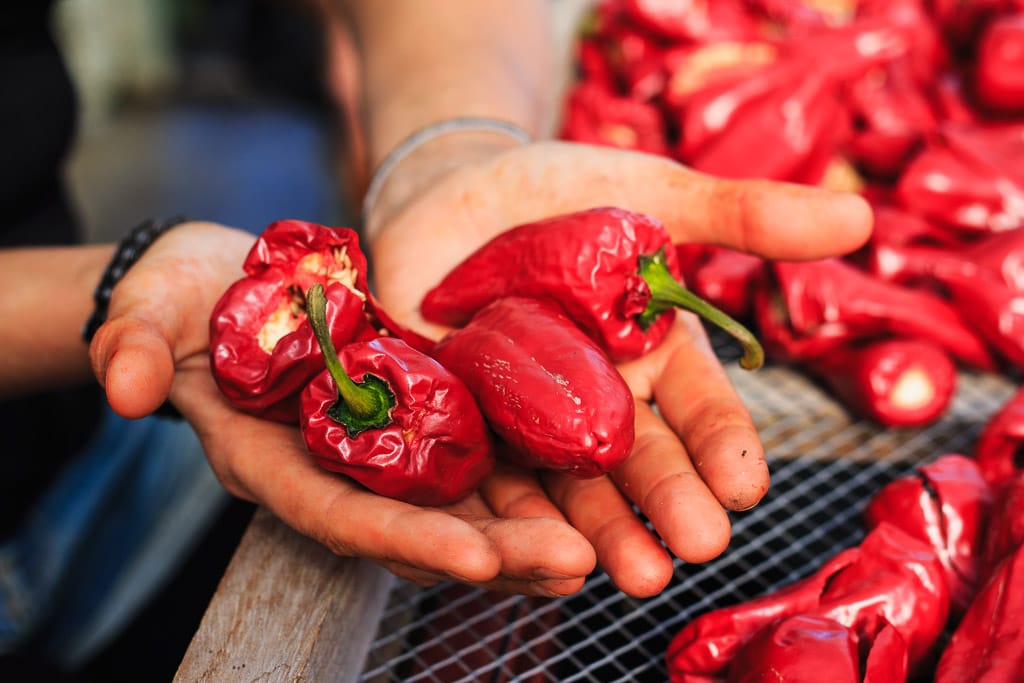
“It has become a staple in the Basque kitchen, replacing black pepper.”
Autumn means an abundance of all types of squash and pumpkins, and what better way to match their flavor than with piment d’Espelette, a fruity and delicate pepper with a medium-low rating on the Scoville scale. Freelance writer Abra Bennett went to the pepper’s annual festival in France Basque country (the last Sunday of October) and reported back in Chile Pepper magazine about the sheer madness that revolves around this pepper.
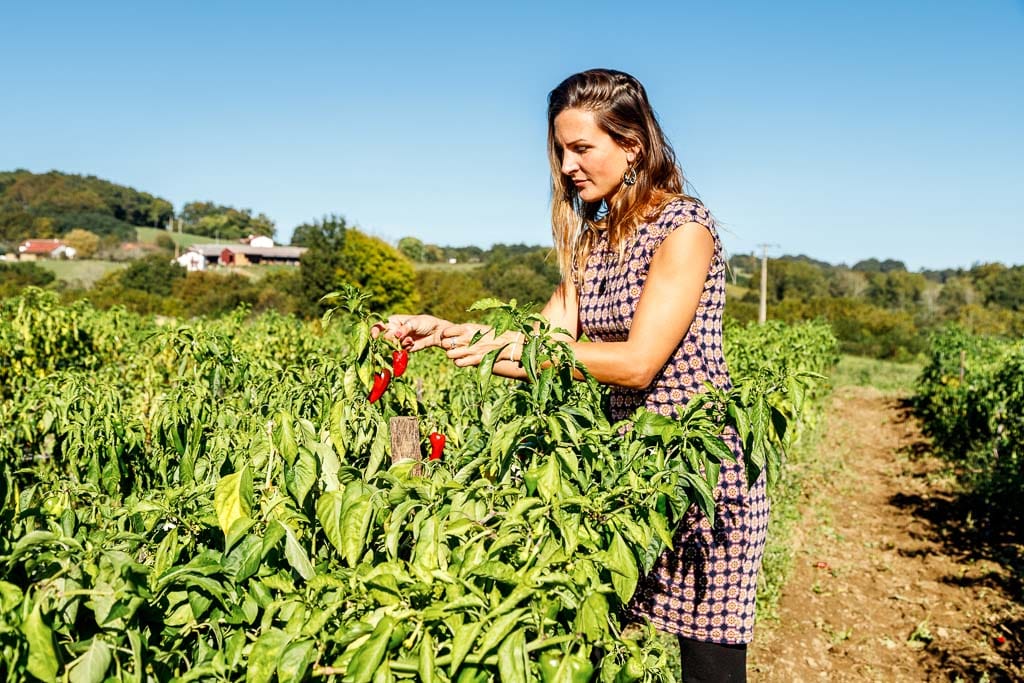
this rare pepper is cultivated, picked and processed by hand, which accounts for its hefty cost of purchasing it. They start off from three to six inches long when ripe, with a conical shape and bright red color.
After concentrating their flavor during drying, the peppers become a deep maroon. They are then toasted in ovens, ground into a fine powder, and packaged by hand in 5-ounce jars for shipping. Although this sweet pepper is rare—with only 133,000 pounds of powdered piment d’Espelette produced annually—it has become a staple in the Basque kitchen, replacing black pepper.
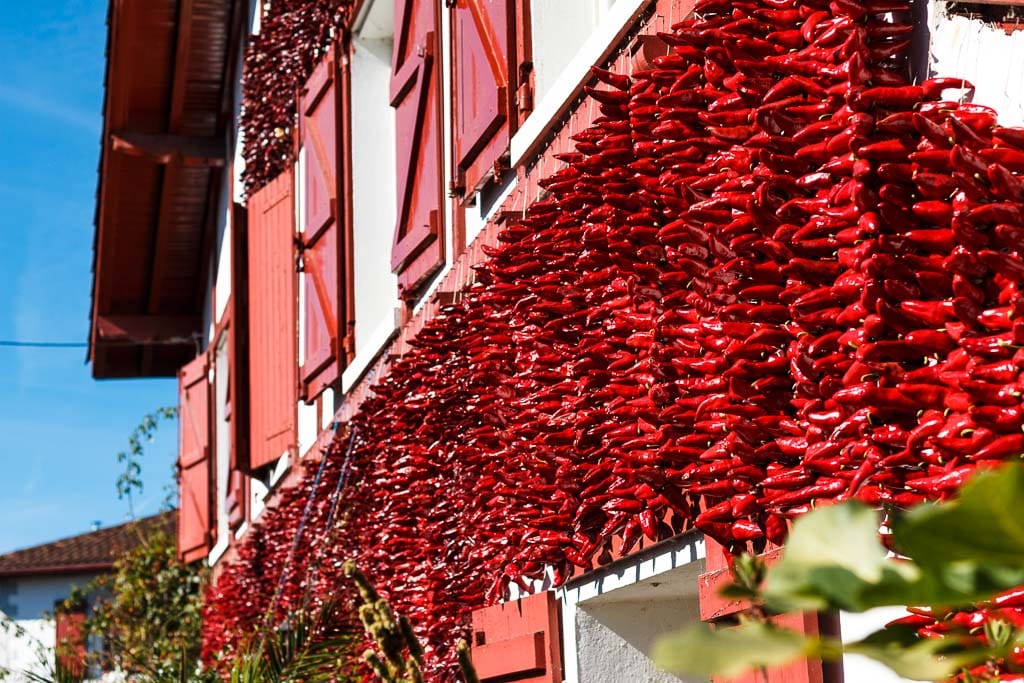
During the festival of the Ezpeletako Biperra, producers of piment d’Espelette as well as cooks and fans of this sweet pepper come out in droves. While producers educate festival participants about the pepper’s cultivation and processing, other participants are there to sample traditional Basque dishes prepared with the pepper.
Used in a beef and veal ragout called axoa, a stew called salmis de palombes made from wild doves or peppery chocolates, this sweet pepper has worked its way into the hearts and dishes of pepper lovers around the world. Look for piment d’Espelette in specialty stores soon or online.